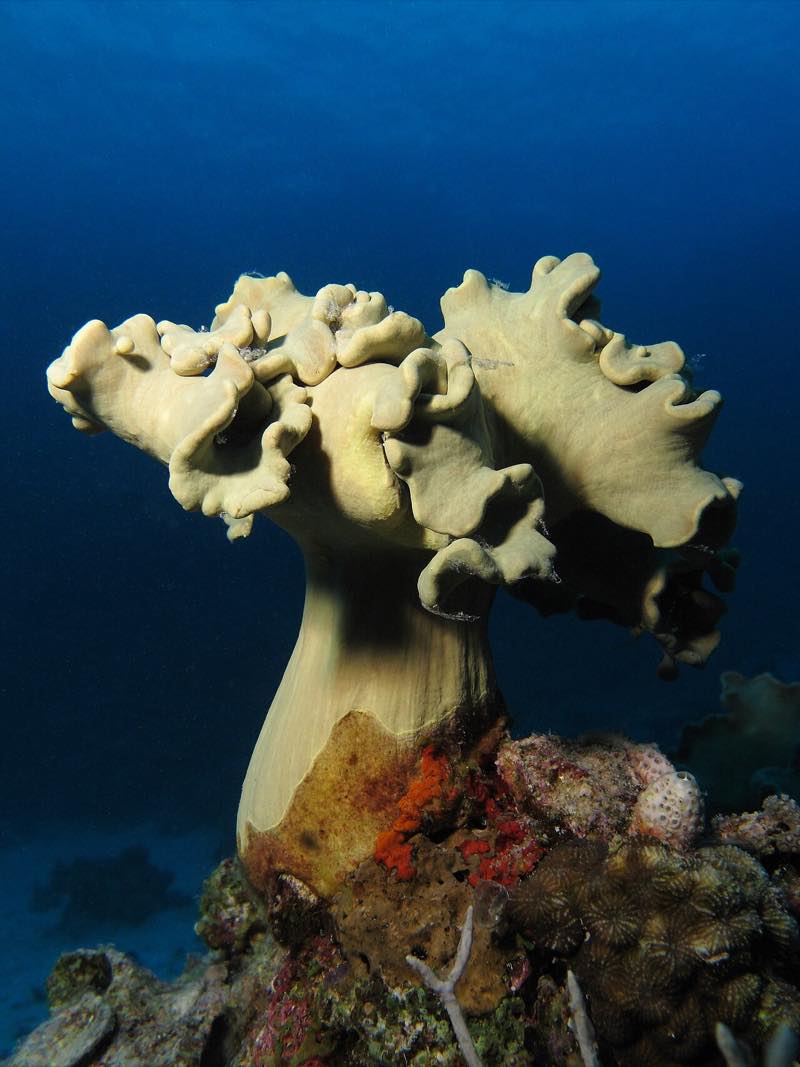
Soft coral (leather)
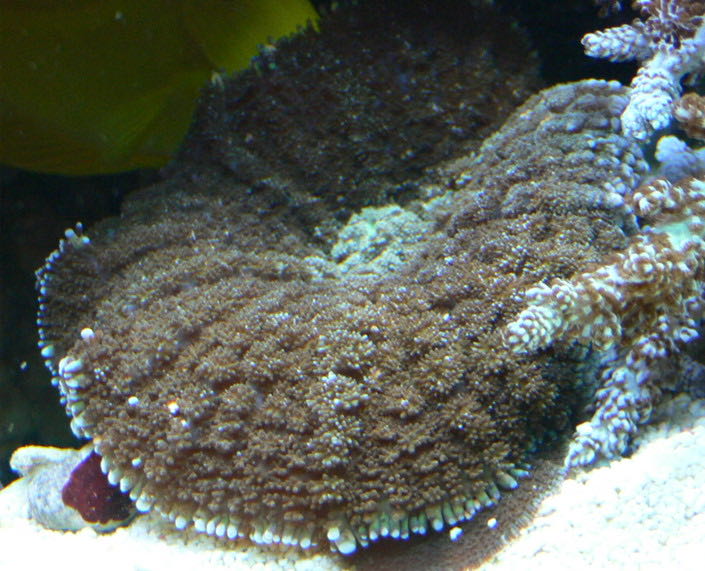
Toadstool leather
Sarcophyton spp.
Also sold as Mushroom leather

- Type
- Soft coral (leather)
- Care level
- Beginner
- Light
- 50 to 150 PAR (low)
- Flow
- Medium
- With neighbours
- Spreads or stings mildly
Safety: handling toadstool leather
Low hazard; wash hands after fragging
How do you care for toadstool leather?
Placement
Low to mid rock, room to grow wide
Flow
Moderate to strong enough to clear its shed film typical, check
Feeding
Not needed
Growth
Moderate to fast
Water quality
Hardy. Sheds a waxy film for 1 to 5 days as normal; investigate if it lasts more than about a week typical, check
How much light does it need?
Sources put it at about 50 to 150 PAR, measured where the coral sits. No figure was published for this coral itself, so this is the usual range for its group. Start a new coral at the low end and raise it over weeks.
Soft coral band.
Which neighbours are safe?
Chemical warfare: releases terpenes that harm nearby corals, especially SPS. One guide suggests tanks under about 200 litres are most affected (unverified) typical, check
Generous; run activated carbon, replaced regularly typical, check
Fish
Fish known to nip this group of corals, or small enough to be caught by it.
Take care (4)
- Coral beautyCoral beauty may nip soft corals, more so when underfed.
- Flame angelfishFlame angelfish may nip soft corals, more so when underfed.
- Foxface rabbitfishFoxface rabbitfish may nip soft corals, more so when underfed.
- Moorish idolMoorish idol may nip soft corals, more so when underfed.
Other corals
Corals that can harm this one if placed too close.
Take care (17)
- Hammer coralHammer coral stings neighbours up to about 15 cm away at night; keep the toadstool leather out of reach.
- Frogspawn coralFrogspawn coral stings neighbours; keep the toadstool leather out of reach.
- Torch coralTorch coral stings neighbours; keep the toadstool leather out of reach.
- GalaxeaGalaxea stings neighbours up to about 15 cm away at night; keep the toadstool leather out of reach.
- Montipora capricornisToadstool leather releases chemicals that can harm SPS such as the montipora capricornis; run activated carbon.
- Montipora digitataToadstool leather releases chemicals that can harm SPS such as the montipora digitata; run activated carbon.
- AcroporaToadstool leather releases chemicals that can harm SPS such as the acropora; run activated carbon.
- Acropora milleporaToadstool leather releases chemicals that can harm SPS such as the acropora millepora; run activated carbon.
- PocilloporaToadstool leather releases chemicals that can harm SPS such as the pocillopora; run activated carbon.
- StylophoraToadstool leather releases chemicals that can harm SPS such as the stylophora; run activated carbon.
- Birdsnest coralToadstool leather releases chemicals that can harm SPS such as the birdsnest coral; run activated carbon.
- Horn coralToadstool leather releases chemicals that can harm SPS such as the horn coral; run activated carbon. Horn coral stings neighbours; keep the toadstool leather out of reach.
- Fire coral (not Acropora millepora)Toadstool leather releases chemicals that can harm SPS such as the fire coral (not Acropora millepora); run activated carbon. Fire coral (not Acropora millepora) stings neighbours; keep the toadstool leather out of reach.
- Bubble tip anemoneBubble tip anemone stings neighbours; keep the toadstool leather out of reach.
- Mini maxiMini maxi stings neighbours; keep the toadstool leather out of reach.
- Carpet anemones (Haddon's, giant)Carpet anemones (Haddon's, giant) stings neighbours; keep the toadstool leather out of reach.
- Ritteri anemoneRitteri anemone stings neighbours; keep the toadstool leather out of reach.
Invertebrates
Invertebrates that may nip corals when hungry.
Take care (3)
- Emerald crabSome emerald crabs nip corals when hungry.
- Peppermint shrimpSome peppermint shrimps nip corals when hungry.
- Camel shrimpSome camel shrimps nip corals when hungry.
These checks follow the reasons fish and invertebrates clash: same species or genus, similar shape, mouth size, temperament, food, burrows, tank size and the order they are added. Individual animals differ; every source agrees on that.
Pests, dips and quarantine
Few
General dip
No dip reliably kills pest eggs, so a dip lowers the risk rather than removing it. Inspect new frags with a torch after lights out, including the underside and the plug.
Sources
Last checked . How we check
Found a mistake? Tell us how to fix it.
Related corals
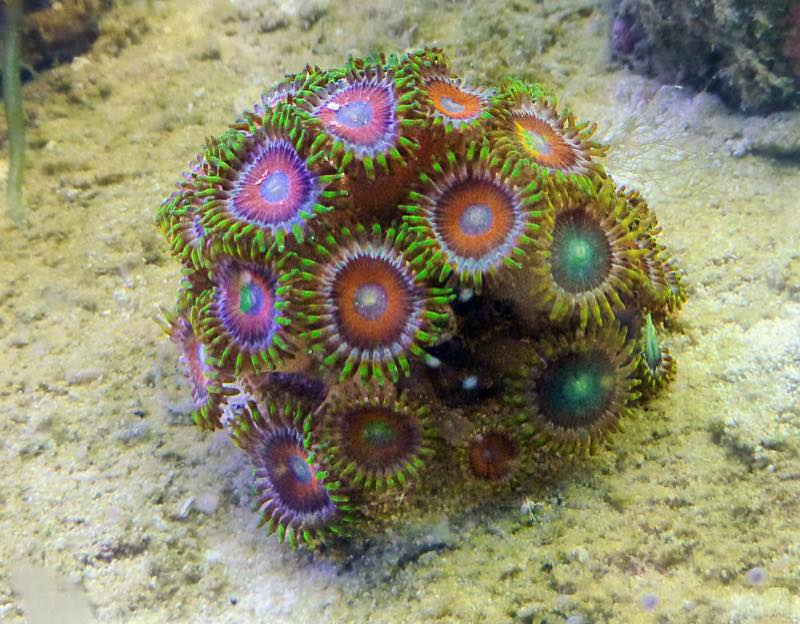
Zoanthids
Zoanthus spp.
- Care
- Beginner
- Light
- Low
- Flow
- Medium
- Neighbours
- Spreads or stings mildly
Photo Kazvorpal, CC BY-SA 3.0
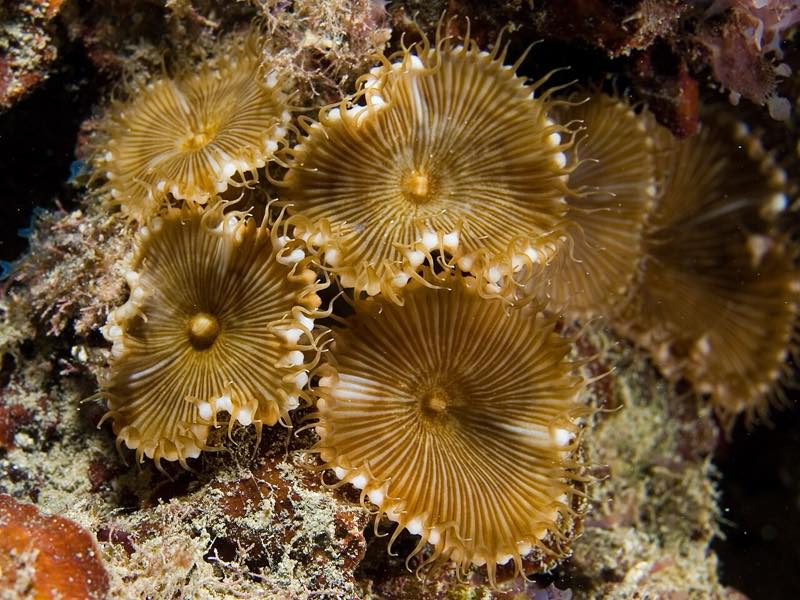
Palythoa
Palythoa spp.
- Care
- Beginner
- Light
- Low
- Flow
- Medium
- Neighbours
- Spreads or stings mildly
Photo Nick Hobgood, CC BY-SA 3.0
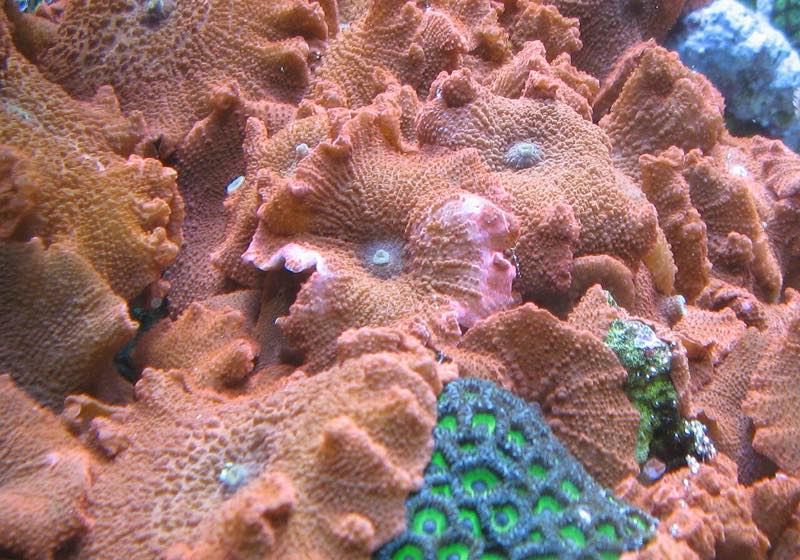
Mushroom coral
Discosoma spp. (corallimorph)
- Care
- Beginner
- Light
- Low
- Flow
- Low
- Neighbours
- Peaceful
Photo Kevmin, CC BY-SA 3.0
Hairy mushroom
Rhodactis spp.
- Care
- Beginner
- Light
- Low
- Flow
- Low
- Neighbours
- Spreads or stings mildly
Photo Haplochromis, Public domain