LPS
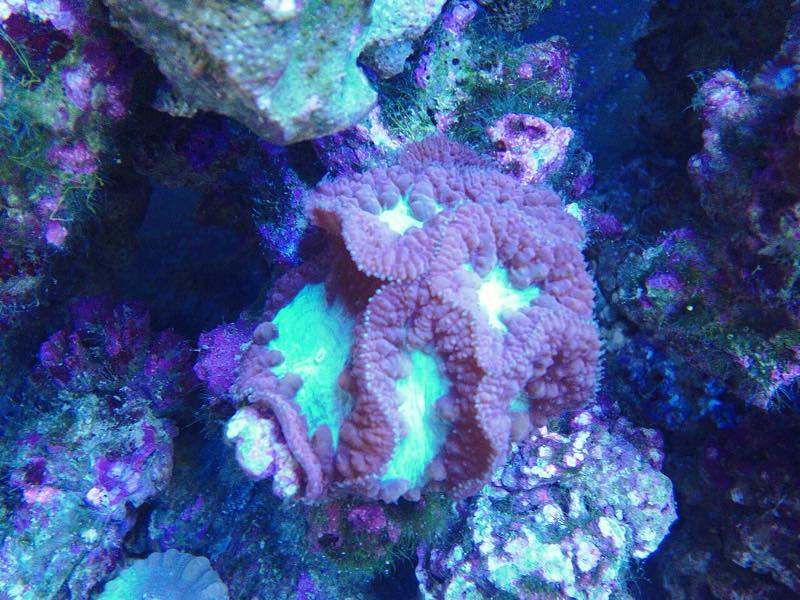
Blastomussa
Blastomussa wellsi, B. merletti
Also sold as Blasto (wellsi and merletti)

- Type
- LPS
- Care level
- Beginner
- Light
- 60 to 120 PAR (low)
- Flow
- Low
- With neighbours
- Peaceful
Safety: handling blastomussa
Low hazard
How do you care for blastomussa?
Placement
Low, shaded
Flow
Low to moderate, indirect
Feeding
Regular feeding advised for growth typical, check
Growth
Slow
Water quality
Forgiving
How much light does it need?
Sources put it at about 60 to 120 PAR, measured where the coral sits. Start a new coral at the low end and raise it over weeks.
One care sheet gives 60 to 120. typical, check
Which neighbours are safe?
Sources disagree: some say sweepers sting, others that it usually loses fights typical, check
Keep away from stinging corals
Fish
Fish known to nip this group of corals, or small enough to be caught by it.
Take care (9)
- Lawnmower blennyLawnmower blenny may nip LPS corals, more so when underfed.
- Bicolor blennyBicolor blenny may nip LPS corals, more so when underfed.
- Tailspot blennyTailspot blenny may nip LPS corals, more so when underfed.
- Coral beautyCoral beauty may nip LPS corals, more so when underfed.
- Flame angelfishFlame angelfish may nip LPS corals, more so when underfed.
- Cherub angelfishCherub angelfish may nip LPS corals, more so when underfed.
- Foxface rabbitfishFoxface rabbitfish may nip LPS corals, more so when underfed.
- Moorish idolMoorish idol may nip LPS corals, more so when underfed.
- Copperband butterflyfishCopperband butterflyfish may nip LPS corals, more so when underfed.
Other corals
Corals that can harm this one if placed too close.
Take care (10)
- Hammer coralHammer coral stings neighbours up to about 15 cm away at night; keep the blastomussa out of reach.
- Frogspawn coralFrogspawn coral stings neighbours; keep the blastomussa out of reach.
- Torch coralTorch coral stings neighbours; keep the blastomussa out of reach.
- GalaxeaGalaxea stings neighbours up to about 15 cm away at night; keep the blastomussa out of reach.
- Horn coralHorn coral stings neighbours; keep the blastomussa out of reach.
- Fire coral (not Acropora millepora)Fire coral (not Acropora millepora) stings neighbours; keep the blastomussa out of reach.
- Bubble tip anemoneBubble tip anemone stings neighbours; keep the blastomussa out of reach.
- Mini maxiMini maxi stings neighbours; keep the blastomussa out of reach.
- Carpet anemones (Haddon's, giant)Carpet anemones (Haddon's, giant) stings neighbours; keep the blastomussa out of reach.
- Ritteri anemoneRitteri anemone stings neighbours; keep the blastomussa out of reach.
Invertebrates
Invertebrates that may nip corals when hungry.
Take care (3)
- Emerald crabSome emerald crabs nip corals when hungry.
- Peppermint shrimpSome peppermint shrimps nip corals when hungry.
- Camel shrimpSome camel shrimps nip corals when hungry.
These checks follow the reasons fish and invertebrates clash: same species or genus, similar shape, mouth size, temperament, food, burrows, tank size and the order they are added. Individual animals differ; every source agrees on that.
Pests, dips and quarantine
Few
General dip
No dip reliably kills pest eggs, so a dip lowers the risk rather than removing it. Inspect new frags with a torch after lights out, including the underside and the plug.
Where sources disagree
| Topic | What sources say | Our reading |
|---|---|---|
| Aggression |
| Sources differ here, so we give the range and the reasons rather than one number. |
Sources
Last checked . How we check
Found a mistake? Tell us how to fix it.
Related corals
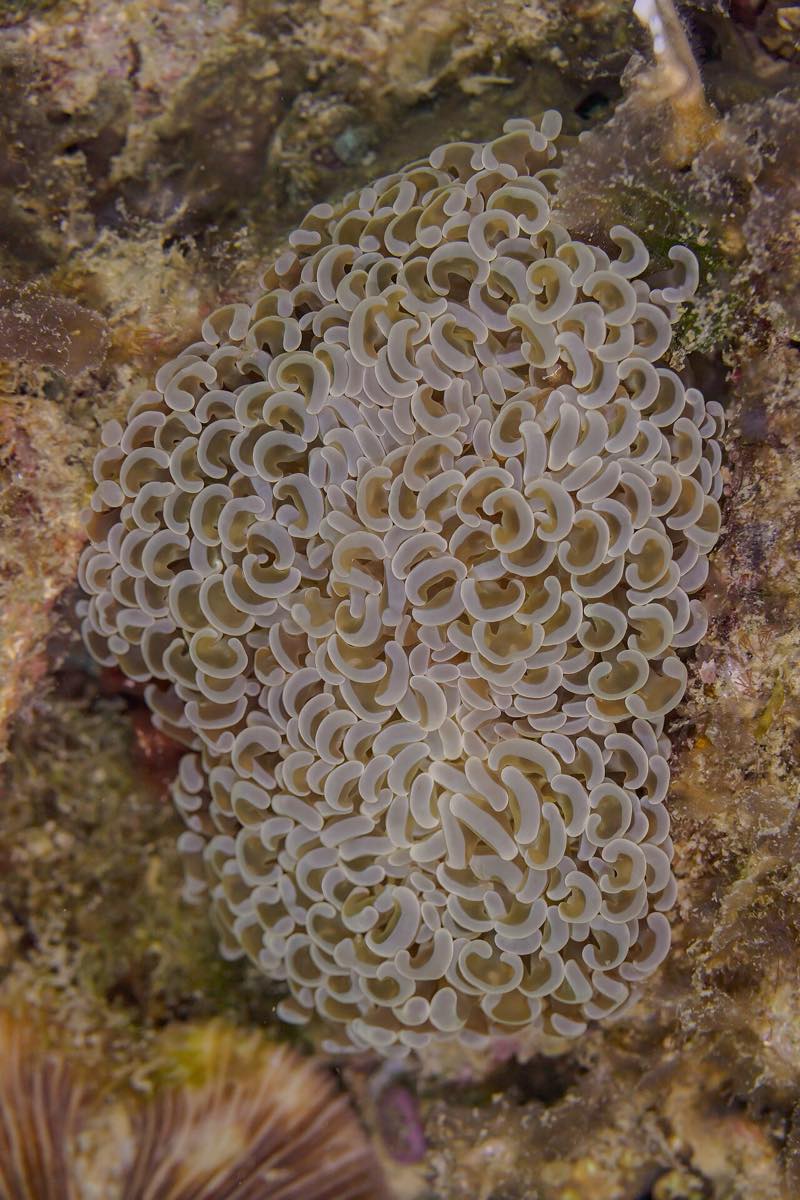
Hammer coral
Fimbriaphyllia ancora (formerly Euphyllia ancora); branching forms include F. paraancora
- Care
- Intermediate
- Light
- Medium
- Flow
- Medium
- Neighbours
- Stings neighbours
Photo Diego Delso, CC BY-SA 4.0
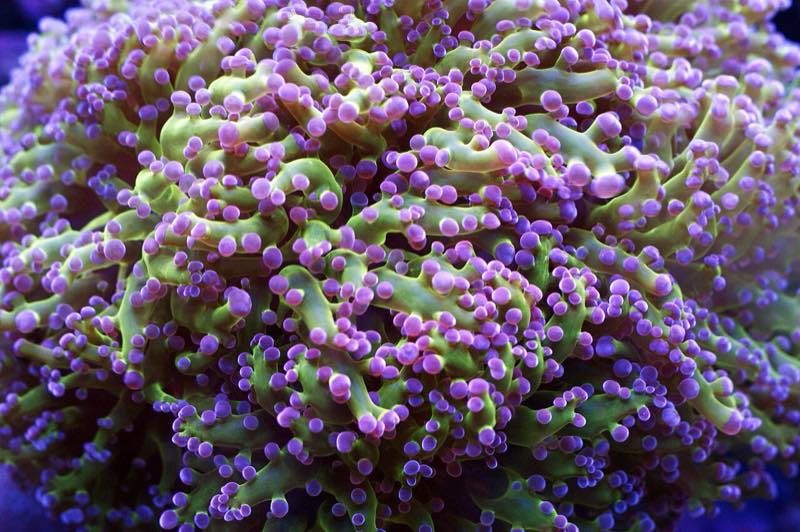
Frogspawn coral
Fimbriaphyllia divisa (formerly Euphyllia divisa)
- Care
- Intermediate
- Light
- Medium
- Flow
- Medium
- Neighbours
- Stings neighbours
Photo Gdiggers, CC BY-SA 3.0
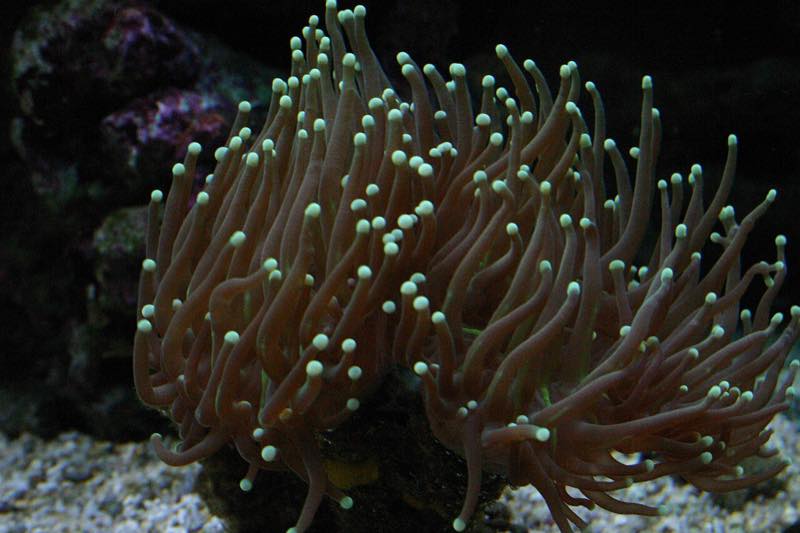
Torch coral
Euphyllia glabrescens (also E. yaeyamaensis)
- Care
- Advanced
- Light
- Medium
- Flow
- Medium
- Neighbours
- Stings neighbours
Photo Josuevg, CC BY-SA 3.0
Duncan coral
Duncanopsammia axifuga
- Care
- Beginner
- Light
- Medium
- Flow
- Medium
- Neighbours
- Peaceful
Photo Kinkreet, CC BY-SA 3.0