Gobies
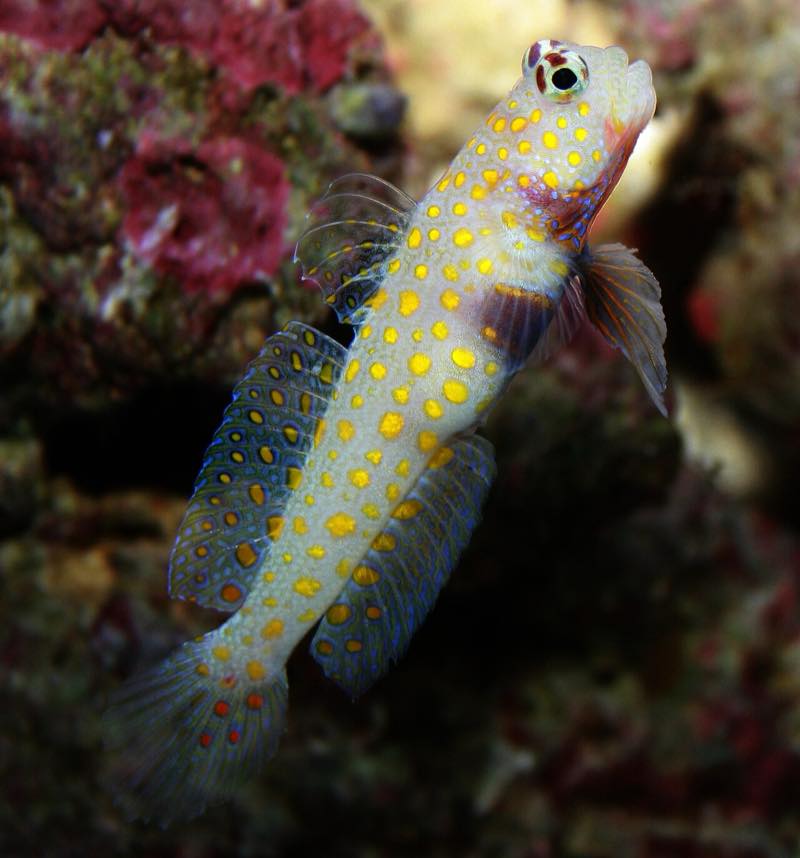
Gold head sleeper goby
Valenciennea strigata
Also sold as Yellowheaded sleeper goby, Blue cheek goby
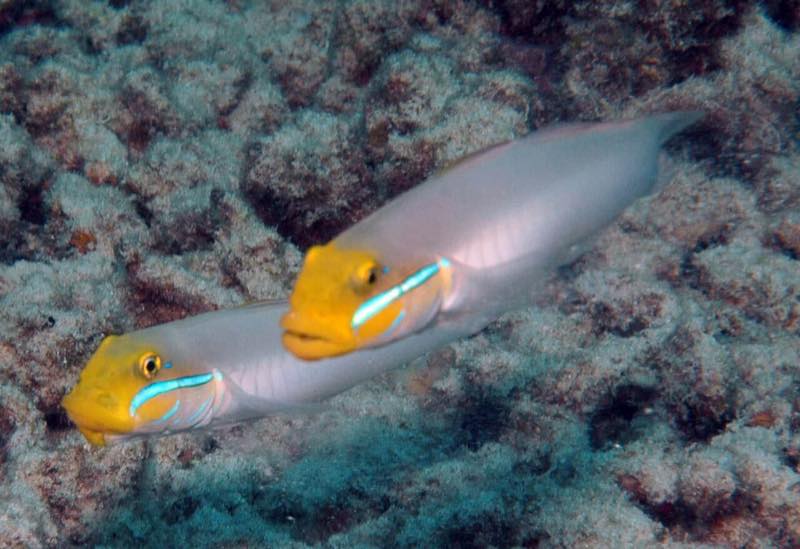

- Care level
- Intermediate
- Adult size
- 15.2 cm in aquariums
- Minimum tank
- 114 litres
- Temperament
- Peaceful
- With corals
- Reef safe with caution
- Captive-bred
- Wild-caught (captive-bred rare)
- IUCN status
- Least Concern
How do you care for the gold head sleeper goby?
Peaceful; fights own kind unless paired.
Feeding
Carnivore; sifts sand for small invertebrates.
Commonly starves in tanks with immature sand beds; needs frequent feeding (LiveAquaria, plus I).
Tank and special needs
Plan for at least 114 litres of water (the care sheet says 30 US gallons).
Deep, mature live sand bed; jumps.
Corals and invertebrates
Does not nip, but sifting dumps sand on corals placed low.
Which tankmates suit the gold head sleeper goby?
Competes with other sand sifters; one per tank or a pair.
Suggested order in a mixed tank: add after the first peaceful fish.
More than one gold head sleeper goby
Only as a mated pair, or two juveniles added together. A third gold head sleeper goby is usually driven out.
Other fish
Checked against the other 59 fish in this guide, assuming a tank big enough for both. Individual fish differ, so treat this as a starting point.
Take care (7)
- Maroon clownfishMaroon clownfish is aggressive and may bully the gold head sleeper goby, especially if the bully is added first.
- Yellow watchman gobyBoth dig or guard burrows in the sand; give each enough sand and rock to claim its own.
- Orange spotted gobyBoth sift the sand for food and compete for it. Both dig or guard burrows in the sand; give each enough sand and rock to claim its own.
- Hi-fin red banded gobyBoth dig or guard burrows in the sand; give each enough sand and rock to claim its own.
- Humbug damselHumbug damsel is aggressive and may bully the gold head sleeper goby, especially if the bully is added first.
- Powder blue tangPowder blue tang is aggressive and may bully the gold head sleeper goby, especially if the bully is added first.
- Yellowhead jawfishBoth dig or guard burrows in the sand; give each enough sand and rock to claim its own.
Usually fine together (52)
- Ocellaris clownfish
- Percula clownfish
- Clark's anemonefish
- Tomato clownfish
- Neon goby
- Yellow clown goby
- Rainford's goby
- Lawnmower blenny
- Bicolor blenny
- Midas blenny
- Tailspot blenny
- Striped fang blenny
- Royal dottyback
- Orchid dottyback
- Magenta dottyback
- Neon dottyback
- Banggai cardinalfish
- Pyjama cardinalfish
- Green chromis
- Yellowtail blue damsel
- Blue damsel
- Azure damsel
- Yellow coris wrasse
- Six line wrasse
- Red head solon fairy wrasse
- Carpenter's flasher wrasse
- Melanurus wrasse
- Leopard wrasse
- Bluestreak cleaner wrasse
- Firefish
- Purple firefish
- Scissortail dartfish
- Lyretail anthias
- Bartlett's anthias
- Royal gramma
- Yellow assessor
- Yellow tang
- Regal blue tang
- Kole tang
- Scopas tang
- Coral beauty
- Flame angelfish
- Cherub angelfish
- Foxface rabbitfish
- Flame hawkfish
- Longnose hawkfish
- Falco hawkfish
- Mandarin dragonet
- Spotted mandarin
- Moorish idol
- Harlequin filefish
- Copperband butterflyfish
Invertebrates
Only the invertebrates with a known risk are listed.
Take care (2)
- Tiger tail sea cucumberA stressed or dead tiger tail sea cucumber can release toxins that harm fish; cover pump intakes.
- Sea appleA stressed or dead sea apple can release toxins that harm fish; cover pump intakes.
Corals and anemones
Only the corals and anemones with a known risk are listed.
No known problems with the corals and anemones in this guide.
These checks follow the reasons fish and invertebrates clash: same species or genus, similar shape, mouth size, temperament, food, burrows, tank size and the order they are added. Individual animals differ; every source agrees on that.
Quarantine and health
Can lose condition fast in a bare quarantine tank; feed well.
New fish are the most common way disease gets into a reef tank. Quarantine every fish in a separate tank before it joins the display, and choose a method that suits its tolerance of copper.
Captive-bred or wild?
Wild-caught.
Where sources disagree
Other minimum tank sizes we found:
- Retailer pairs 30 gal with a populated refugium; a larger mature sand bed is safer.
What does it cost in the UK?
about £36. This is one UK retailer’s listing on 21 October 2026, not a market average, and every item was sold out on that day.
Sources
Last checked . How we check
Found a mistake? Tell us how to fix it.
Related fish
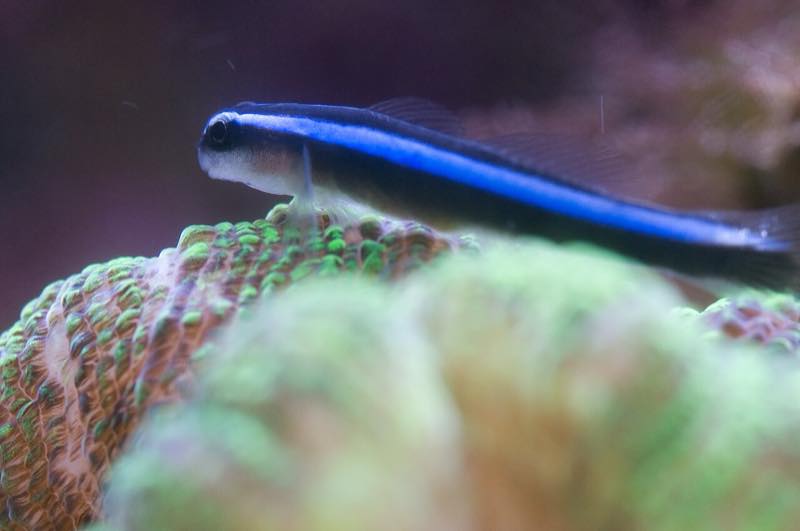
Neon goby
Elacatinus oceanops
Good first fish
- Care
- Beginner
- Adult size
- 5 cm
- Tank from
- 38 litres
- Temperament
- Peaceful
- Corals
- Reef safe
Photo Jmk7, CC BY-SA 3.0
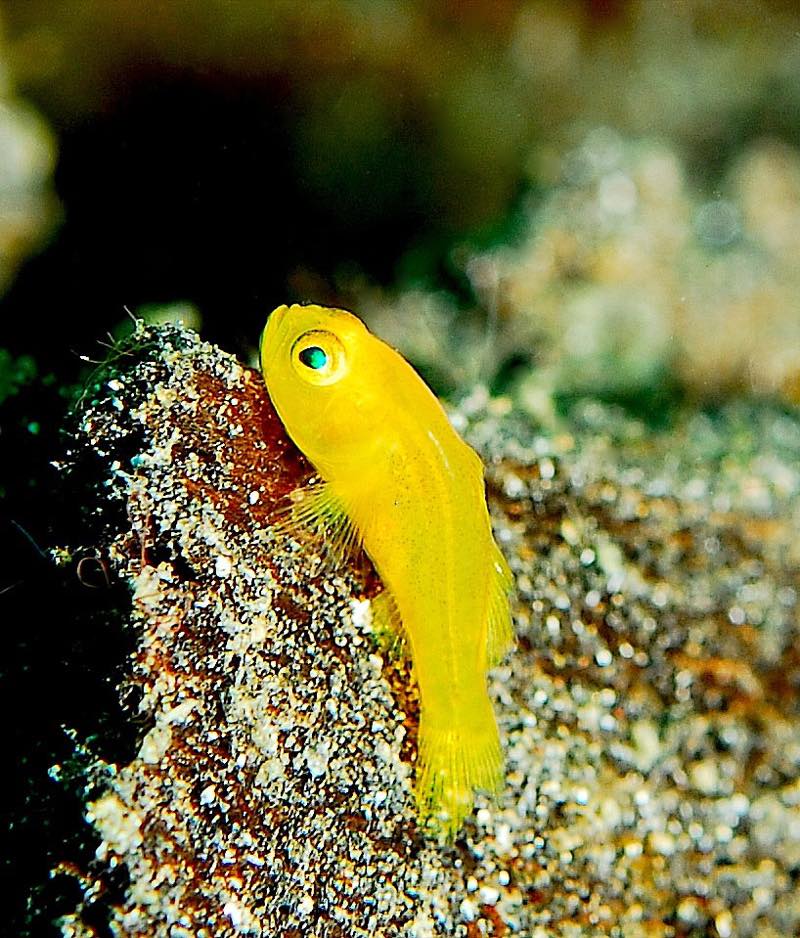
Yellow clown goby
Gobiodon okinawae
- Care
- Beginner
- Adult size
- 4 cm
- Tank from
- 38 litres
- Temperament
- Peaceful
- Corals
- Reef safe with caution
Photo Jenny, CC BY 2.0
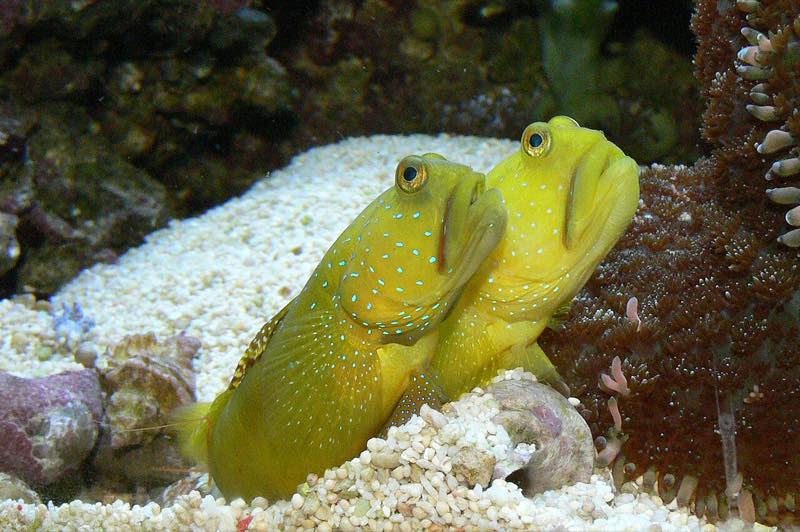
Yellow watchman goby
Cryptocentrus cinctus
Good first fish
- Care
- Beginner
- Adult size
- 10 cm
- Tank from
- 114 litres
- Temperament
- Peaceful
- Corals
- Reef safe
Photo Haplochromis, CC BY-SA 3.0
Orange spotted goby
Amblyeleotris guttata
- Care
- Beginner
- Adult size
- 9 cm
- Tank from
- 38 litres
- Temperament
- Peaceful
- Corals
- Reef safe with caution
Photo Sushi Girl1995, CC BY-SA 3.0